

Keynote Speeches
Keynote Speeches
Semi-Infinite Optimization in Industrial Engineering: A Reformulation Approach to Aircraft Deconfliction
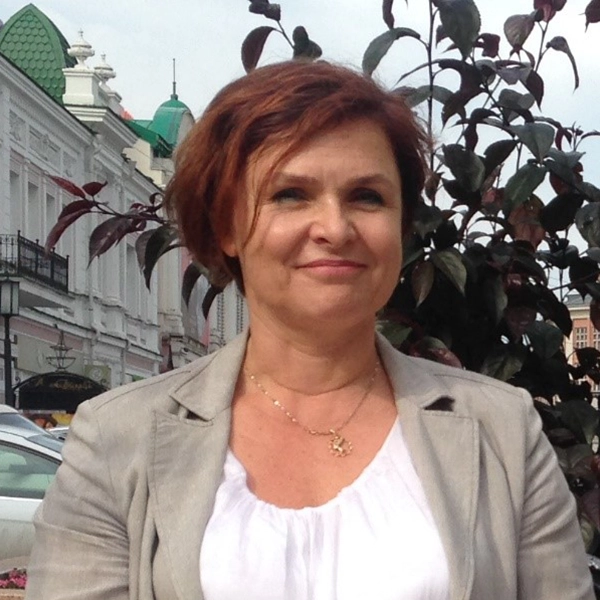
Dr. Tatiana Tchemisova
Department of Mathematics, University of Aveiro
Short Bio
Dr. Tatiana Tchemisova is an Associate Professor in the Department of Mathematics and a researcher at CIDMA (Center for Research and Development in Mathematics and Applications), University of Aveiro, Portugal. She graduated from the Belarusian State University and received her Ph.D. in Physical and Mathematical Sciences from the National Academy of Sciences of Belarus in 1996.
For over 25 years, she has taught undergraduate and postgraduate courses in optimization and operations research, supervised Ph.D. and Master’s students, and coordinated research seminars in convex, semi-infinite, and semidefinite programming.
Her research focuses on mathematical optimization, particularly continuous and convex optimization, semi-infinite and semidefinite optimization, and optimization over convex cones. She also works on shape optimization, mass transfer and minimal resistance problems, and applications of optimization methods in transportation, data mining, and decision support.
Professor Tchemisova is the author or co-author of more than 50 scientific publications and several textbooks. She serves on the editorial boards of several international journals and has been a guest editor of special issues in journals including Optimization, Discrete Applied Mathematics, and Journal of Convex Analysis, as well as the Springer CCIS series. She has chaired or co-chaired numerous international conferences and has served on the organizing and scientific committees of more than 50 conferences. Since 2020, she has been a board member of the WISDOM Forum (Women in Society: Doing Operational Research and Management Science) of EURO (Association of European Operational Research Societies).
Abstract
Semi-infinite optimization provides a powerful framework for modeling engineering problems involving constraints that must be satisfied continuously over time or over an infinite set of parameters. In this talk, we present an industrial engineering application of semi-infinite programming to the aircraft deconfliction problem, a fundamental challenge in air traffic management aimed at ensuring safe separation between aircraft.
The proposed approach is based on small, operationally acceptable speed adjustments that are automatically applied to aircraft while they traverse controlled airspace. Since the required safety separation must be maintained continuously throughout the flight, the problem is naturally formulated as a semi-infinite programming (SIP) model.
We first review the original SIP formulation for speed-based aircraft deconfliction and evaluate the performance of several state-of-the-art direct solution methods implemented in modern SIP software. Their computational strengths and limitations are illustrated through a series of numerical experiments. We then introduce a nonlinear programming reformulation of the SIP model, providing an efficient alternative solution strategy. Computational results show that the proposed reformulation consistently outperforms existing heuristic approaches reported in the literature in terms of solution quality while maintaining computational efficiency.
This application illustrates the potential of semi-infinite optimization, together with nonlinear reformulation techniques, as an effective framework for solving challenging continuous optimization problems arising in industrial engineering and air traffic management.